

Celebrating Sukkoth: The Festival of Tabernacles
Just as all other Ordained Festivals in Scripture, Sukkoth is a physical representation of spiritual principles the Father desires all of His Children to know, understand and embody which express the unique relationship Believers have with the Father, Son and Set Apart Spirit (Exo. 12:49, Gal. 3:28-29, Rom. 11, Heb. 10, 1 Corin. 5:8, Jhn. 4:24). So, what is this "Festival of Tabernacles" and how does it reflect our relationship? We must first understand what "sukkoth" physically are and how they are commonly used, then we can explore what they symbolize spiritually for Believers in Messiah and how we are called to observe it in this day and age.
Etymologically, "sukkoth", or "sukkuth" in Ancient Hebrew, translates to "tabernacles". A sukkah is a "temporary dwelling place" which is not meant to be lived in exclusively or permanently because it is not designed to withstand major weather events such as severe wind or hail storms, nor is it intended to provide strong protection against intense heat or water intrusion such as that common in a wildfire or flood. Neither is it built to prevent dangerous intruders from easily entering, such as thieves or ravenous beasts. In the truest sense of the term, sukkuth are "tents" comprised of temporary building materials which break down more easily than permanent structures and need to be replaced more
often.

The Sukkah from The Chosen, "The Perfect Opportunity" Season 2, Episode 4
However, for all their many weaknesses, sukkuth do offer some benefits depending on their materials used especially when constructed with their intended purpose and usage in mind. They are often built to provide a certain level of protection from the harsh heat of the desert sun or the blistering wind, to act as a barrier from the bitter cold, or even to provide a dry shelter from the rain. They may also be designed to offer a sense of privacy with walls which also serve as a boundary to signify the contents and people inside are protected by those who dwell within when traveling amongst others. Sometimes, they are simply setup to provide a shelter for livestock during the winter months, or a designated place of gathering where friends and family can be entertained, where furniture is housed for added comfort, where lamps may be lit to provide adequate light in the darkness, a place where fires may offer warmth from the outside cold, where food may be served without so readily attracting pests or where music and chatting can be more easily discerned without the sounds of instruments and voices disappearing so easily into the open air. They are often built because they are more practical than a permanent structure. Because of their nature, sukkuth are much easier to build than traditional homes or buildings. Often, they can be constructed without much strength or skill, require very little materials which are generally more accessible and plentiful in the local environment, or can be obtained for a comparatively smaller cost. They can also be light enough to carry long distances without causing too much trouble and designed for quick assembly and deconstruction. For these reasons, ancient sukkuth were most often used by travelers and merchant traders, shepherds protecting their flocks while out on pasture, wandering tribes leading their herds through seasonal migration such as the Saharan desert dwelling Bedouin nomads and other cultures more familiar to Believers today such as the ancient Hebrews.

These humble shelters were often the grandest of the various kinds of sukkuth. While many are built from rougher materials such as palm fronds for coverage and dead branches for stability, generally lacking a true floor, or even walls or doors for short-term usage (such as a couple of hours or days). These are more carefully designed for long-term dwelling and are often constructed with greener branches or timbers which are fired and cured for better flexibility to offer higher resiliency, strength and longer-term preservation and are less likely to blow over or cave in during severe weather. They also include more weather-resistant exterior coverings such as those made from tightly woven wool yarn, stitched animal-skin hides or tanned leather to offer an enhanced level of insulation, better wind protection, more climate control often including layers of wool rugs or pelts to provide a true refuge from the harsh environment. The roof, walls and floors are often staked and tied down by cords to protect the structure from falling apart or moving out of place. In fact, in the original form of Abaryth (Pictograph Hebrew), the second letter "Bayt" from which the name "Bethlehem" or "Bayt Lacham" i.e. "The House of Bread" is derived, meaning "house" was a "sukkah" or "tent". For this reason, the common term of endearment for the Father in Heaven, "Abba" (Rom. 8:15), composed of the letters Alaph Bayt, literally means, "Strength of the House". This is also why Abraham's name means "father of many nations":
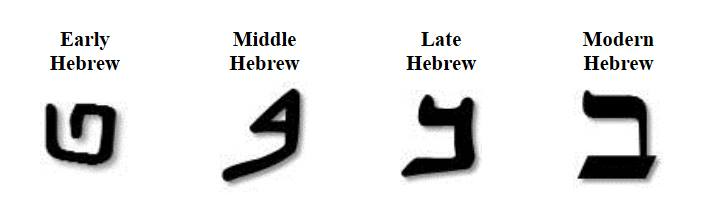
Just as modern tents require stakes and cords to keep the structure firmly secured to the foundation, sukkuth were often nailed down by stakes. In ancient Pictographic Hebrew, the letter Uau (often called "vav" in Modern Hebrew today), was representative of a two-pronged stick driven into the ground to hold down the cords:

Ultimately, these sukkuth staked down point towards the manifestation of the Two Houses of Yasharal joining together once again during this New Covenant Age under the Messiah's Banner:
"And He said to me, “Son of man, these bones are all the House of Yasharal.
See, they say, ‘Our bones are dry, our expectancy has perished,
and we ourselves have been cut off!’
Therefore prophesy, and you shall say to them,
'Thus said the Master יהוה, “See, O My People, I am opening your graves,
and shall bring you up from your graves, and shall bring you into the Land of Yasharal.
And you shall know that I am יהוה, when I open your graves, O My people,
and bring you up from your graves. And I shall put My Spirit in you,
and you shall live, and I shall settle you in your own land.
And you shall know that I יהוה have spoken, and I have done it,' declares יהוה.
And the word of יהוה came to me, saying,
'And you, son of man, take a stick for yourself and write on it,
‘For Yahudah and for the Children of Yasharal, his companions.’
Then take another stick and write on it,
‘For Yusaph, the Stick of Aphraym, and for all the House of Yasharal, his companions.’
Then bring them together for yourself into one stick,
and they shall become one in your hand.
And when the children of your People speak to you, saying,
‘Won’t you show us what you mean by these?’ say to them,
‘Thus said the Master יהוה, “See, I am taking the Stick of Yusaph,
which is in the hand of Aphraym, and the Tribes of Yasharal, his companions.
And I shall give them unto him, with the Stick of Yahudah,
and make them one stick, and they shall be one in My hand.
And the sticks on which you write shall be in your hand before their eyes.
And speak to them, ‘Thus said the Master יהוה,
“See, I am taking the Children of Yasharal from among the gentiles,
wherever they have gone, and shall gather them from all around,
and I shall bring them into their land.
And I shall make them one nation in the Land, on the Mountains of Yasharal.
And One Sovereign shall be Sovereign over them all,
and let them no longer be two nations,
and let them no longer be divided into two reigns."
-Yatsaqal/Ezekiel 37:11-22
Ancient Hebrews often built these kinds of structures to live in more permanently. These structures were often referred to as "ahal" (Yahu./Josh. 7:22). In fact, these are the style of sukkuth the fathers of the faith such as Abraham, Yatschaq and Yaacub temporarily dwelled in throughout their lives.
"By Belief, Abraham obeyed when he was Called to go out to the place which he was about to receive as an Inheritance. And he went out, not knowing where he was going. By Belief, he sojourned in the Land of Promise as a stranger, dwelling in tents with Yatsḥaq and Ya‛aqub, the Heirs with him of the same Promise, for he was looking for the City having Foundations, whose Builder and Maker is Alahym."
-Hebrews 11:8-10
As their families grew, so their tents grew with them. As needed, new peices of leather, hide or wool patches were added to the existing ahalym in order to provide adequate space and coverage for the growing family. This practice is well represented in YashaYahu's prophetic encouragement to the Nation of Yasharalym:
“'Sing, O barren one, you who did not bear! Break forth into singing, and cry aloud,
you who have not been in labour! For the children of the deserted one
are more than the children of the married woman,' said יהוה.
Enlarge the place of your tent, and let them stretch out the curtains of your dwellings. Spare not, lengthen your cords, and strengthen your stakes.
For you shall break forth to the right and to the left,
and your Seed inherit the gentiles, and make the deserted cities inhabited.”
-YashaYahu 54:1-3
These are the precisely the kinds of homes the Hebrew people dwelled in during their Exodus out of Matsarym (Egypt). The Heavenly Father commanded the Yasharalym to pitch their tents in a specific order by dividing them into the twelve tribes all around the "Tent of Meeting" which served as the dwelling place of the Set Apart Spirit and was therefore the designated Temple of Alahym in the Wilderness:
"And יהוה spoke to Mashah (Moses) and to Aharan, saying,
'The children of Yasharal are to camp, each one by his own banner,
beside the sign of his father’s house. Let them camp
around the Tent of Meeting at a distance.”
-Numbers 2:1-2

This strategic arrangement and prescribed distance of the tents of the people and the Tabernacle in the center constantly reminded the Yasharalym they were not just set free from their bondage to Pharoah to please the flesh, but in order to serve the Father, Son and Set Apart Spirit with "all their hearts, minds and strength" by keeping their eyes fixed on the Truth. The camp laid out in the figure of a cross continually pointed them back to the future Hope and Expectation of The Crucifixion by placing each tribe in view of the Spirit's Physical presence rising out of the most Set Apart Place where the Ten Commandments of Yahuah were hidden deeply within. This particular configuration served as a physical representation of the spiritual revelation: that the Father would eventually Deliver His People from the Curse of Sin and Death through the Sacrifice of His only Begotten Son, Whose death, burial and resurrection would provide a Way for our sins and uncleanness to be forgiven and forgotten forever so the Set Apart Spirit may come to dwell inside of the eternal temple (the bodies of Believers) to lead and guide us into perfect Righteousness by writing the Commandments upon our hearts and minds so we may one day dwell with Alahym face-to-face in the perfected Eternal Kingdom:

The most rudimentary sukkuth are often constructed with sticks and foliage of various kinds, in fact these are exactly the kind of sukkuth the Hebrew people are
commanded to build during the annual fall Festival of Tabernacles:
"On the Fifteenth Day of the Seventh Month, when you gather in the fruit of the land, observe the Festival of יהוה for seven days. On the first day is a Sabbath, and on the eighth day a Sabbath. And you shall take for yourselves on the first day the fruit of good trees, branches of palm trees, twigs of leafy trees, and willows of the stream, and shall rejoice before יהוה your Alahym for seven days. And you shall observe it as a Festival to יהוה for seven days in the year – a law forever in your generations. Observe it in the Seventh Month. Dwell in sukkuth for seven days; all who are native Yasharlym dwell in sukkuth, so that your generations know that I made the children of Yasharal dwell in sukkuth when I brought them out of the land of Matsarym (Egypt). I am יהוה your Alahym.”"
-Leviticus 23:39-43
There the Father explains His People are commanded to dwell in sukkuth made of local foliage every autumn throughout every generation to reminisce over our ancestors' Exodus out of Egypt. For forty years that generation dwelled in tents, forced to wander through the desert due to their unbelief (Yahusha/Joshua 5:6, Hebrews 3:7-10). This annual experience is meant to reinforce the same lesson He sought to teach that wayward generation by causing them to dwell in temporary shelters; His People have always and will always be called to trust and obey Him as our one true Alahym, our "mighty one" and "highest authority," to come to depend on Him as our ultimate provider and protector. Although they were individually called to sow, plant, reap and present a tenth of their harvests before Him at the Place wherever He placed His Name, He asked for the first-fruits, the best of their yield, to sanctify the crop and reaffirm their trust in His providence and protection:
“Perform the Festival of Booths for seven days after the ingathering
from your threshing-floor and from your winepress,
and you shall rejoice in your Festival, you and your son and your daughter,
and your male servant and your female servant, and the Lĕwite,
and the stranger and the fatherless and the widow who are within your gates.
For seven days you shall observe a Festival to יהוה your Alahym
in the Place which יהוה chooses, because יהוה your Alahym
does bless you in all your increase and in all the work of your hands,
and you shall be only rejoicing! Three times a year all your males
appear before יהוה your Alahym in the Place which He chooses:
at the Festival of Unleavened Bread, and at the Festival of Weeks,
and at the Festival of Booths.
And none should appear before יהוה empty-handed,
but each one with the gift of his hand, according to the blessing
of יהוה your Alahym which He has given you."
-Deuteronomy 16:13-17
"You shall tithe without fail all the yield of your grain
that the field brings forth year by year.
And you shall eat before יהוה your Alahym,
in the Place where He chooses to make His Name dwell,
the tithe of your grain and your new wine and your oil,
and of the firstlings of your herds and your sheep,
so that you learn to fear יהוה your Alahym always.
But when the way is too long for you,
so that you are not able to bring the tithe,
or when the Place where יהוה your Alahym
chooses to put His Name is too far from you,
when יהוה your Alahym is blessing you,
then you shall give it in silver,
and shall take the silver in your hand and go to the Place
which יהוה your Alahym chooses.
And you shall use the silver for whatever your being desires:
for cattle or sheep, for wine or strong drink,
for whatever your being desires.
And you shall eat there before יהוה your Alahym,
and you shall rejoice, you and your household."
-Deuteronomy 14:22-26
Just as He Promised that generation, if they would keep His Commandments then they would enter the land Promised to Abraham, Yatshaq and Yaacub, a land "overflowing with milk and honey" (Leviticus 20:22-24) - so do we have the Promise of an Expectation of Deliverance from sin and death into eternal life and transfiguration into our incorruptible minds, bodies and spirits and to experience "life and life abundantly" (Yahu./John 10:10-15) in this world when we keep His commandments and believe in His Only Begotten Son, a Promise to not only receive the Promised Land of Yasharal, but to join the Messiah in Co-rulership and Inheritance of the entire earth (Jubilees 32:19). While they were commanded to bring their first-fruits to Yarushalam during every Festival of Tabernacles, so do we offer ourselves as a living offering by doing "our utmost to present ourselves approved to Alahym, a worker who does not need to be ashamed, rightly handling the Word of Truth (2 Tim. 2:15)":
“But seek first the Kingdom of Alahym, and His Righteousness,
and all these matters shall be added to you."
-MathathYahu 6:33
"I call upon you, therefore, brothers, through the Compassion of Alahym,
to present your bodies a Living Offering,
Set Apart, Well-pleasing to Alahym, your reasonable worship,
and do not be conformed to this world
but be transformed by the renewing of your mind,
so that you prove what is that good and
well-pleasing and perfect desire of Alahym."
-Romans 12:1-2
As Believers in the New Covenant Age, we are called to exercise our Faith in the "Rock of Salvation" (Mt. 7:24-27) by allowing the gifts and fruits of the Set Apart Spirit to shine as a light in this broken world so all those who see us may "praise and glorify the Father in Heaven" (MathathYahu/Matthew 5:16). As a "Set Apart Royal Priesthood of Righteousness" (1 Peter 2:9), we are instead called to submit to the Spirit's conviction to give love offerings to those in need, such as orphans, widows (Yaacub/James 1:27), and especially those of the Household of Alahym:
"Do not be led astray: Alahym is not mocked,
for whatever a man sows, that he shall also reap.
Because he who sows to his own flesh shall reap corruption from the flesh,
but he who sows to the Spirit shall reap Everlasting Life from the Spirit.
And let us not lose heart in doing good,
for in due season we shall reap, if we do not grow weary.
So then, as we have occasion, let us do good to all,
especially to those who are of the household of the Belief."
-Galatians 6:7-10
"He who sows sparingly shall also reap sparingly,
and he who sows on blessing shall also reap on blessing.
Let each one give as he purposes in his heart,
not of grief or of necessity, for Alahym loves a joyous giver.
And Alahym is able to make all favour overflow toward you,
that you, always having all you need in every way,
have plenty for every good work."
-2 Corinthians 9:6-8
For this reason, in preparation for the Great Tribulation and the Second Coming of Messiah, regardless of wherever we live, Believers are commanded to honor the Set Apart Assemblies during all of the High Shabbaths and Festivals of Yah as Natsarym (Acts 24:5), "Branches of The Vine" grafted in to the "New City of Yarushalam" and "Abarym" (Hebrew children of Abraham): the Yasharalym (Romans 11).
“The woman said to Him, 'Master, I see that You are a prophet.
Our fathers worshipped on this mountain,
but you people say that in Yarushalam is the Place
where one needs to worship. יהושע said to her, 'Woman, believe Me,
the hour is coming when you shall neither on this mountain,
nor in Yarushalam, worship the Father.
You worship what you do not know. We worship what we know,
because the Deliverance is of the Yahudym.
But the hour is coming, and now is,
when the true worshippers shall worship the Father in Spirit and Truth,
for the Father also does seek such to worship Him.
Alahym is Spirit, and those who worship Him
need to worship in Spirit and Truth.'”
-Yahuchanan/John 4:19-24
Therefore, we too are called to live in temporary dwelling places every year to remember the Heavenly Father is fully capable of providing for and protecting His Flock through His infinite omniscience, omnipotence and omnipresence when we confess, repent, are immersed for the forgiveness of our sins and do our utmost to "work out our salvation with fear and trembling," so we may present ourselves before Him in blamelessness (Php. 2:12, Eph. 5:27, 2 Pet. 3:13-15, Revelation 19:7):
"And it shall come to pass, that whosoever shall be left
of all the nations that came against Yarushalam,
shall even come up every year to worship the king Yahuah Alahym,
and to keep the Feast of Tabernacles.
And it shall come to pass, that whosoever of all the families of the earth
shall not come up to Yarushalam to worship the king Yahuah Alahym,
even these shall be added to the others.
And if the family of Matsarym (Egypt) shall not go up,
nor come; then upon them shall be the overthrow
with which Yahuah shall smite all the nations,
whichever of them shall not come up to keep the Feast of Tabernacles.
This shall be the sin of Matsraym, and the sin of all the gentiles,
whosoever shall not come up to keep the Feast of Tabernacles."
-ZacharYah 14:16-19
Although we are fully aware these tents may not withstand severe windstorms, or stop hail falling from heaven or keep out a hungry beast, we know He will place His hand of supernatural protection over us when we are truly walking in Righteousness. Instead of leaning into fear, we walk faith by "fixating our minds on things above" (Col. 3:1-3). Because, just as He swore we could expect a surplus and security when they obeyed, so we would expect scarcity and punishments when we rebel (Levi. 26). Much like fasting, dwelling in tents allows to practice being uncomfortable in the flesh to strengthen our spirit so we may develop the discipline necessary to resist the temptation to resort to submitting to man and breaking His commands in times of great tribulation. In this way, we learn to place our trust in the divine protection and provision of the Living Alahym by believing He will always provide a Way in the Wilderness.
We are called to instead remember our Hope and Expectation of a future without pain, death, hunger or sickness because we know we will experience a transformation out of these temporary, destructable souls into those which can one day "draw near" to the Father, "Who is an-all consuming fire". Just as Adam and Eve were originally made with incorruptible bodies and spirits which were impervious to nature and able to live, work and rest comfortably unclothed eternally. After they disobeyed the Father's command by consuming the Fruit of the Tree of the Knowledge of Good and Evil, the consequences of their transgression resulted in a curse altogether changing their minds, bodies and spirits. Their once incorruptible heavenly bodies were transformed into corruptible and fleshly bodies which eventually decay and die. These bodies now require the protection of clothing from the elements and a spiritual covering to appease the wrath of the Creator for their sin through sacrifice so their souls (minds, bodies and spirits) may one day be Resurrected and Changed into incorruptible eternal beings once more. And these corrupted bodies we inherit from our forefathers, so in this way our fleshly bodies are a type of tabernacle, or a "temporary dwelling place" for our eternal spirits which must be sanctified.
Much like the original Temple in the Wilderness He asked His People to carry with them until they were commanded to build a more permanent stone structure in its place in Yarushalam (aka "Jerusalem", the "City of Peace"). However, that stone building was also referred to as a "Tabernacle", but why would a permanently built building as magnificent as Solomon's or Herod's be called a "Tabernacle"? Because these buildings were "made by hands" of men, not the Almighty Father! He designed His Temple on earth to be a "Temporary Dwelling Place" for His Spirit to dwell until it could come to dwell in those covered by the Blood of the Lamb!
In this way, where Adam and Eve caused our bodies to need shelter from the storm and repetitive temporary atonement for our sin, the Messiah offered a Way for our bodies to be transformed into the likeness of incorruptible angels by offering His Own corruptible body and blood as an eternal covering for our minds, bodies and spirits.
What love! The First-Born of all Creation, to step off His Throne in Heaven and willingly give up His perfect eternal body and Heavenly Dwelling to take on this corruptible flesh, to be born as a feeble baby and "tabernacled among us"! - and all the while anticipating His People would not clothe Him in the royal robes He deserved, but mock Him, beat Him and crucify Him, effectively attempting to destroy the temple of His body to protect the Temporary Dwelling Place on earth! But, He knew it was worth the pain and suffering, because through His One Offering all those humble souls who recognize our ignorance, confess our sin and appreciate His sacrifice through bowing to our Messianic King by "laying down our flesh to follow the Lamb wherever He leads them (Rev. 14:4)" will be Resurrected and Transformed to dwell with Him face to face, in perfect peace eternally in the New City of Yarushalam (Rev. 21:2).
Oh! If the Jews really knew what Sukkoth was about. Like some Christians, many Jews also wonder why so many Believers are "appropriating their holiday"... well it testifies to the goodness of the Son who was born in a type of sukkah during the season of Sukkuth along with the lambs in the field. How could we not? It is the very essence of our "hope and expectation"! The Festival of Tabernacles teaches us the Father is a Shelter from the storms to those who love Him, and we celebrate it each year by celebrating the First Day as a High Shabbat, building our sukkuth in which we feast, worship, praise and dwell in for seven days, and celebrating the last Great Day of the Feast: the Eighth Day of Addition (Jubilees 31-32) trusting His Protection around a campfire, just as He led our forefathers in the Wilderness by a pillar of smoke and fire, so we too trust He will lead us by His Spirit Who will sanctify us (even unto perfection if we so allow) and also protect us from the flaming fire in the Day of Judgement because of the Covering of Messiah He sent for us.
Enjoy this Eight Day Study Guide to dive deeper into the meaning and memorial of the wonderful Festival of Tabernacles:


Comments